
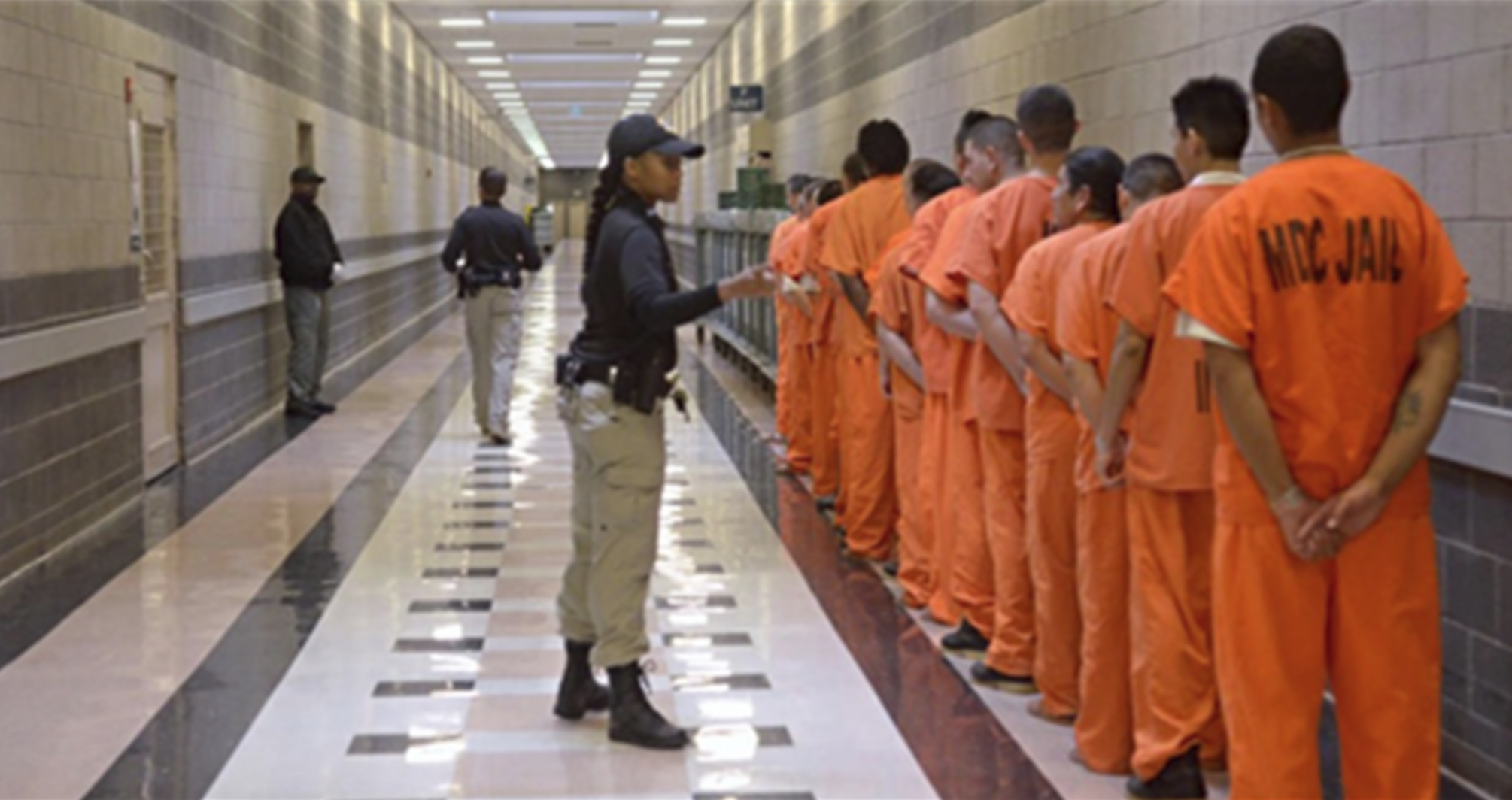
Albuquerque Metropolitan Detention Center- incarceration center for men.
Years ago, I was invited to teach drawing in a rehabilitation program for men at the Albuquerque Metropolitan Detention Center. The program was called Comienzos—“beginnings” in Spanish—a word that carried more hope than I felt as I drove out across the empty mesa west of Albuquerque. Two Catholic sisters had founded it in 1988 after studying programs across the country that restored dignity and genuine freedom to incarcerated men and women.
One of those sisters, MaryJo, had attended a contemplative drawing session of mine at Richard Rohr’s Center for Action and Contemplation. She was a diminutive woman in her early eighties, nimble in body and in spirit. Her eyes seemed permanently set to “twinkle.” She witnessed how drawing could loosen tension and release unexpected laughter, and afterward she simply said, “The men would like this.” I felt honored—and deeply intimidated. Teaching at a men’s prison felt like a foreign country.
The detention center rose out of the desert like a concrete outpost, encircled by twenty-foot fencing fringed with barbed wire and razor coil. I hauled in canvas bags of drawing supplies, a small CD player (this was 2000), and a bundle of silk flowers. At intake, I was ready for a full inspection, but the woman behind the counter glanced at my driver’s license, handed it back, and waved me through. She never opened my bags. That should have reassured me; instead it added a thin layer of unease.
A guard with a granite expression escorted me down a long hallway punctuated by reinforced windows looking into dorms filled with metal beds and men. TVs flickered from high corners. Conversations stopped as we passed. Faces turned. Catcalls began. I suddenly regretted the cartoon on my canvas bag—Mona Lisa proclaiming, Kiss an Artist Today!! My stomach tightened into a hard knot.
Then we reached the small classroom where Comienzos met. Sister MaryJo greeted me with her bright, birdlike energy, and my friend Steve offered a grounding warmth. Fifteen men sat around a long table. Some had fresh bruises on their faces; others folded into themselves. A few held their expressions like armor. This program also taught anger management—I hoped it had worked that morning.
I unpacked pencils, paper, sharpeners, and the silk flowers, placing them on the table like small offerings. I asked how many had drawn anything that week. Nothing. This month? Nothing. This year? Shrugs. Five years? Still nothing. Ten years? A few reluctant nods. Most had abandoned drawing around twelve or thirteen—which struck me as the exact age boys often begin abandoning vulnerability.
So I talked about the left and right brain, about how what we believe we see often gets in the way of seeing what is actually there. That art, even if they didn’t wish to pursue it, could reveal new ways of perceiving. I demonstrated a pure contour drawing of my hand on the chalkboard—looking only at my hand, not the chalk. “You can laugh,” I said. “I won’t be offended.” They did laugh, loudly, and unexpectedly, I felt something inside me settle. Awareness was sharp, but fear fell away. A quiet voice inside whispered, Pay attention. You’re supposed to be here. They are supposed to be here. Somehow all our past choices brought us here together in this moment. It is radically OKAY. Live it.
They began to draw. Some rushed and had to start again; others settled in and moved slowly. Peruvian guitar music drifted through the room from the CD player. After five minutes, I let them look at their drawings. Laughter erupted again, warmer this time.
We continued. They drew the silk flowers—several wishing aloud for real ones. Then they drew my head and face. Then something they hated, something they loved, and finally a new creation forged from both. Their imaginations surprised me each time: a friend, a private door (not for escape, but for solitude), “power food” to sustain hope.
Then I gambled. I asked if they would allow someone else in the room to draw them—pure contour. They all agreed. As the music played, something in the atmosphere shifted. Shoulders relaxed. Faces softened. When they shared the drawings, the room filled with laughter once more, but this time the laughter had a strange tenderness beneath it.
I asked how it felt to be drawn. One man spoke up: “This is the only room where this could’ve happened. Anywhere else, you might get shanked.” He paused, then added, “It is a fucking relief—sorry, Sister—to be seen. To have somebody look you in the fuckin’ eyes because they want to see you. And to look back and not be a perv.”
Our ninety minutes were almost over. As I gathered my materials, Steve suddenly said, “We’re missing a pencil sharpener. I don’t care who took it. But if you want Barbara to come back, it better be on the table in the next three minutes.” A rumble went through the room: “Put it back. Don’t screw this up.”
Only then did it occur to me that my little sharpeners contained razor blades. I resumed talking casually about right-brain perception while the tension worked itself out. When I glanced down, the sharpener had quietly returned.
Sister MaryJo walked me back through the hallway alone. “Be sure to get your driver’s license back,” she said.
“They never took it.”
She stopped. “That’s not supposed to happen. And they didn’t search your bags?”
“No.”
She shook her head. In all her years of prison work, she said, neither of those things had ever occurred. “You must have an honest face,” she said.
I thought of the Jedi master waving his hand: This is not the droid you’re looking for.
Back in my car, I remembered Richard Rohr’s advice—not to give the men personal information, and to mentally cut any energetic cords between us before leaving. So I sat there, picturing each face, and gently released them.
A week later, walking down our dirt road in the mountains to collect the mail, I found a large envelope. Inside was a card signed by every man in the program. Their words were warm, vulnerable, grateful. One message stopped me where I stood:
“Thank you. The time you taught us how to see and draw was the most freedom I’ve felt in my whole life. I thought it was the walls that held me in. It’s me.”
I held the card in both hands, the mountains silent around me, and felt the truth of it deepen—an unexpected beginning for all of us.